CONFIDENCE Trusting yourself,
Confidence isn’t about always playing well—it’s about learning to trust yourself no matter what happens. Every golfer hits bad shots, but the best players don’t let one mistake turn into five. By focusing on one shot at a time and using a simple reset routine, young players can stay present, bounce back quickly, and build confidence that lasts beyond the course.
IDENTITY FIRST You are more than
Golf is something you do—it is not who you are. When young athletes connect their self-worth to performance, every round can feel like a judgment of who they are as a person. Learning to build identity outside the game helps kids enjoy golf more, handle challenges better, and grow into confident people both on and off the course.
SELF-TALK Learning how to speak to
Great players aren’t positive all the time.
EMOTIONAL Understanding emotions
Frustration, nerves, disappointment, and pressure are all part of sports. Instead of ignoring those feelings, young golfers can learn how to recognize and talk about them in healthy ways. Emotional awareness helps athletes communicate better, respond more calmly to adversity, and understand that emotions are normal—not something to be ashamed of.
RESILIENCE Learning how to
Every athlete faces setbacks, mistakes, and difficult rounds. Resilience is not about pretending things don’t hurt—it’s about learning how to respond, recover, and keep moving forward. By developing perspective and healthy coping skills early, young golfers can learn that challenges are not failures, but opportunities to grow stronger.
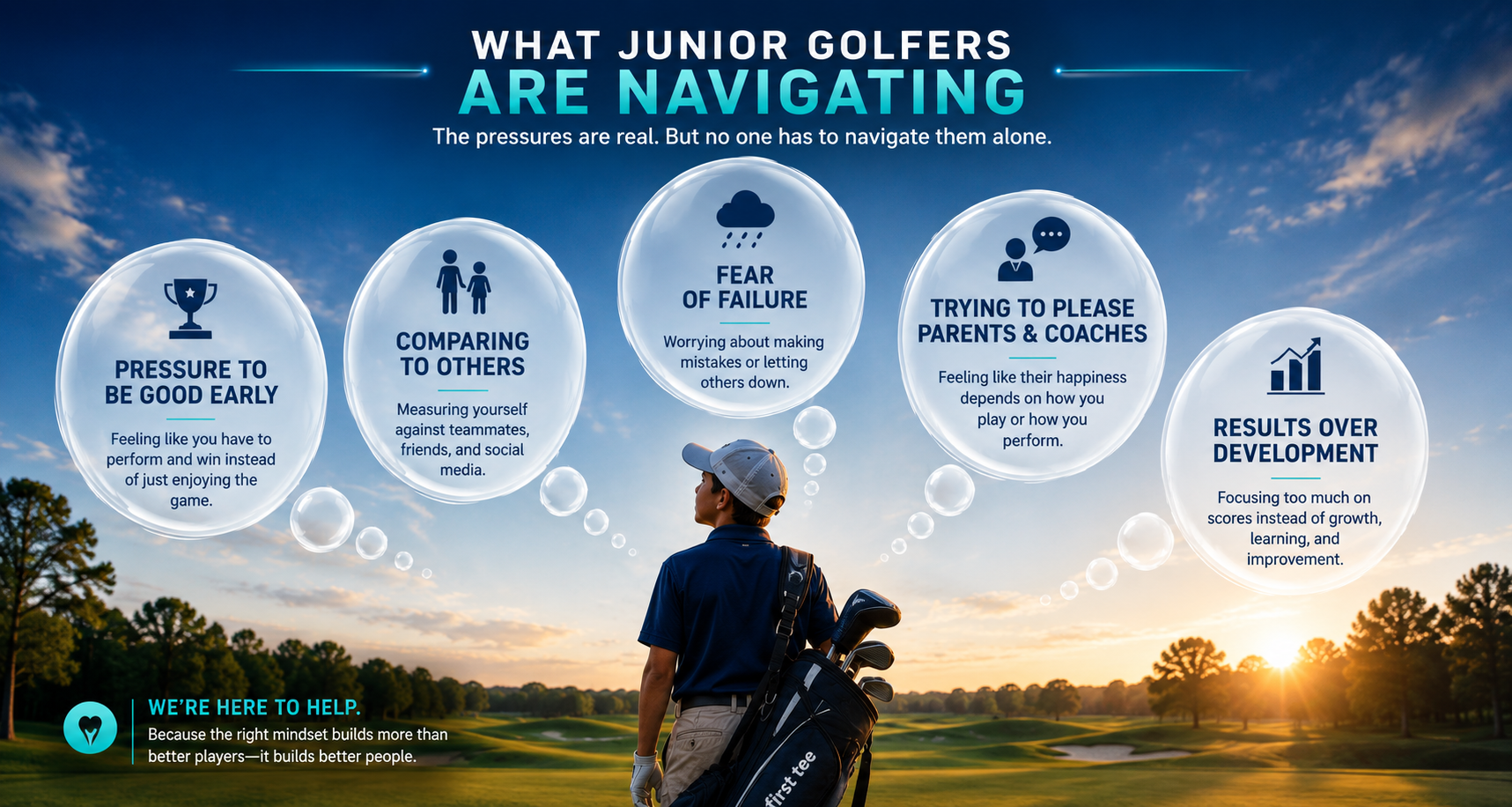
PRESSURE & Pressure should be embraced
Pressure is not something to fear—it’s something every athlete experiences when they care deeply about what they are doing. Young golfers can learn that nerves, butterflies, and uncomfortable moments are normal parts of competition and growth. By keeping perspective and understanding that one shot or one round does not define them, players can begin to compete with more freedom, confidence, and enjoyment of the game.